
Formats, products and research use
PBM devices come in many forms.
Photobiomodulation is delivered with different light sources and applicators, from a small probe to a full-body bed. The device’s shape or advertised wattage alone does not show what dose reaches the target tissue or what evidence supports a particular use.
Device formats
From small applicators to full-body systems.
Product examples show the range of designs. They are not endorsements or a complete market catalogue.
| Format | What it looks like | Examples |
|---|---|---|
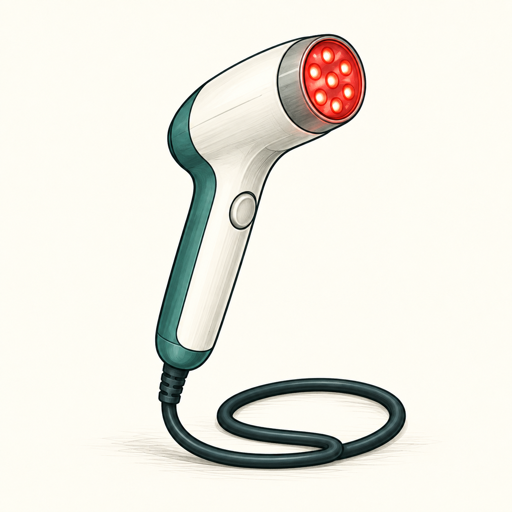 Handheld probes and applicators Handheld probes and applicators | A small treatment head used near a specific area. Professional systems may use a laser probe or an LED cluster. |
|
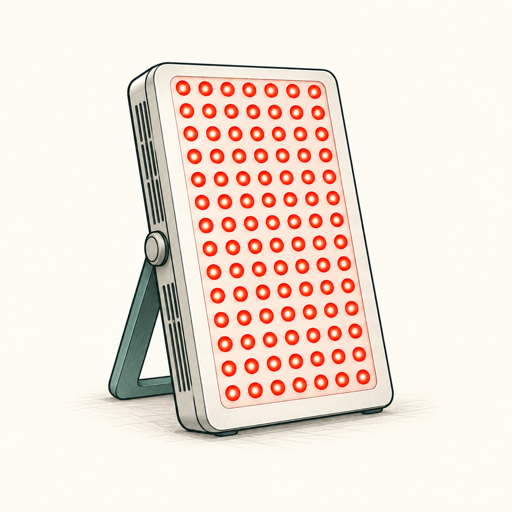 Panels and lamps Panels and lamps | Flat LED arrays, from small tabletop panels to larger panels for broader areas. Some have stands or wall mounts. | |
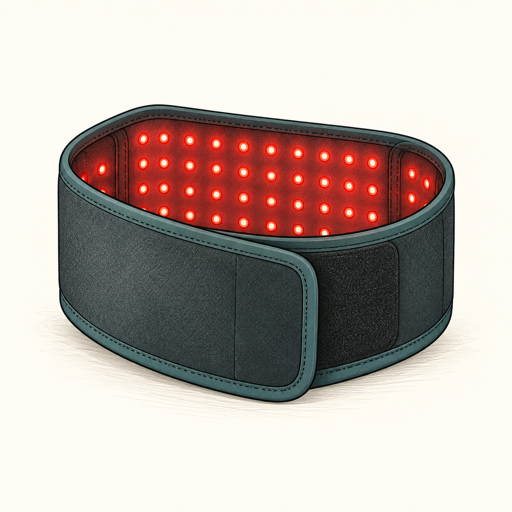 Flexible pads and wraps Flexible pads and wraps | Flexible LED surfaces, straps or modules positioned around a body area; some conform closely to the body. |
|
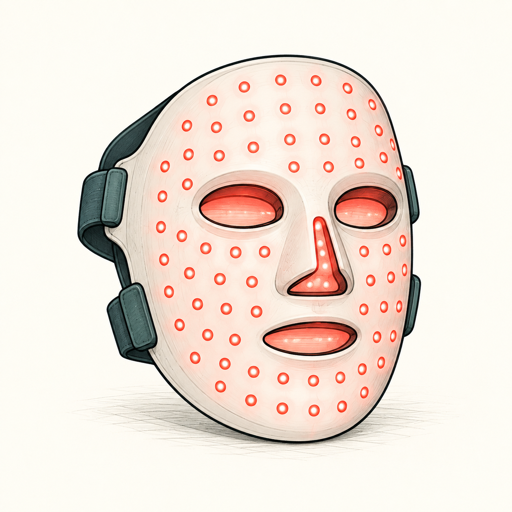 Face masks Face masks | A close-fitting wearable light array shaped for the face. Wavelengths, fit and coverage differ by model. | |
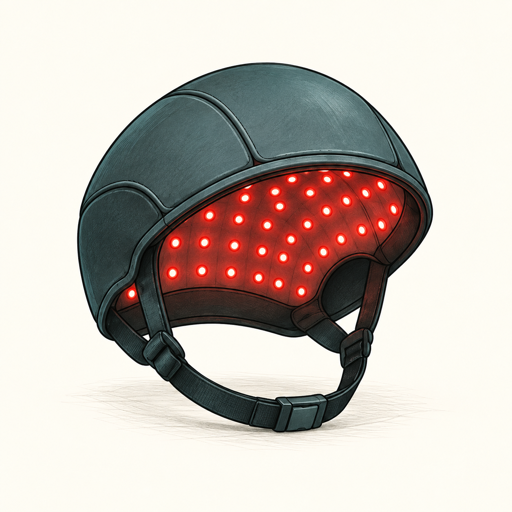 Caps, helmets and headsets Caps, helmets and headsets | Wearable devices shaped for the scalp or head. Some are hair caps; some pair head-mounted light modules with a nasal applicator. | |
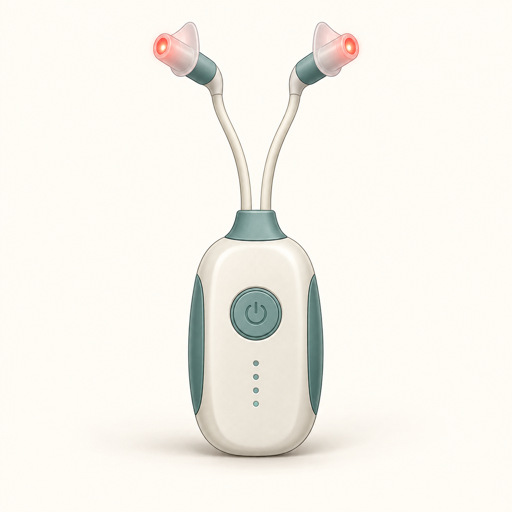 Intranasal devices Intranasal devices | A slim light emitter sits just inside one or both nostrils. Some devices are standalone; others pair a nasal module with a cranial headset. |
|
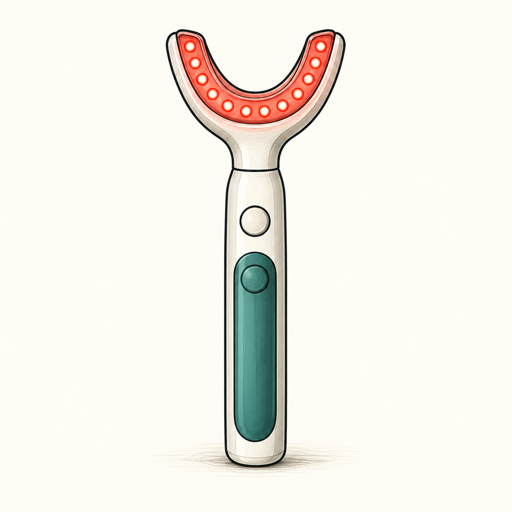 Oral and dental devices Oral and dental devices | Toothbrush-shaped devices and mouthpieces deliver light close to oral tissues. These are specialized designs. |
|
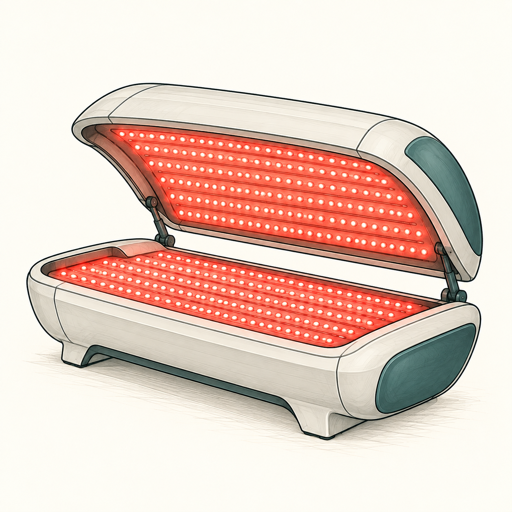 Full-body beds and pods Full-body beds and pods | Large systems designed to expose much of the body at once, generally in a commercial or clinical setting. |
|
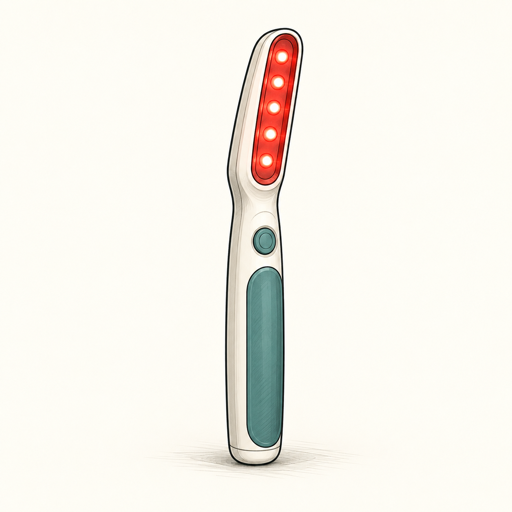 Wands and other shapes Wands and other shapes | Handheld wands, bulbs, bracelets and other less common shapes. Size, output and intended use vary. |
|
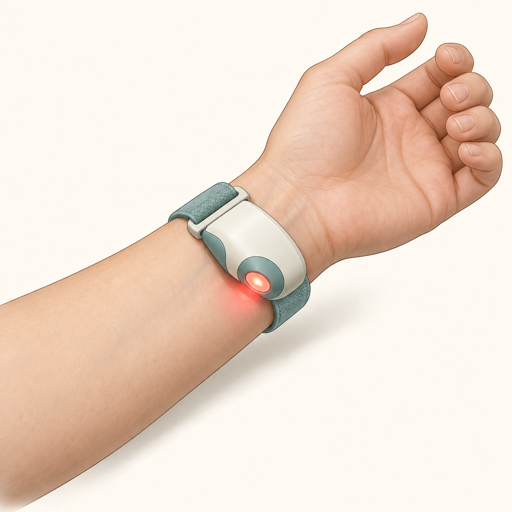 Transcutaneous vascular PBM Transcutaneous vascular PBM | Light is applied through the skin over a superficial vessel, often the radial artery, using a handheld probe or wrist-mounted holder. It is not delivered into the vessel. |
|
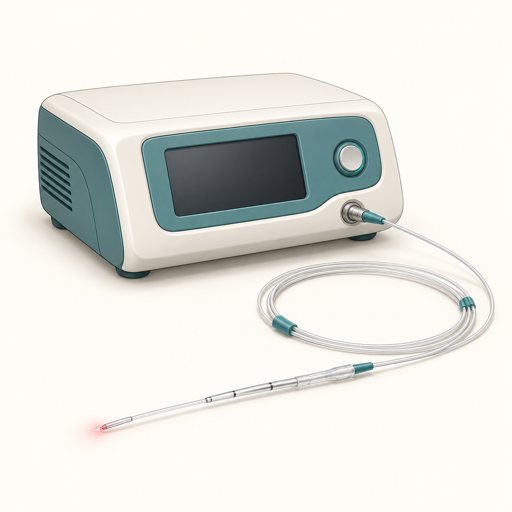 Intravascular PBM (ILIB) Intravascular PBM (ILIB) | A laser is coupled to a sterile optical fibre or catheter inserted into a vein, delivering light from within the vessel. |
|
The formats can overlap. In the literature, VPBM and ILIB labels are not always used consistently; these rows distinguish external light applied over a vessel from intravascular fibre-optic delivery by the physical route. A product name or design does not by itself show its output, intended use or supporting evidence. Current availability and specifications should be checked with the manufacturer.
Comparing devices
Specifications that describe the device.
Examples below focus on the light source, wavelength, optical output and irradiance—not treatment schedules used in a study.
| Device example | Light source | Wavelength | Irradiance | Optical output |
|---|---|---|---|---|
| Hooga HG200 panel | LED | 660 nm red + 850 nm near-infrared | 90 mW/cm²1 | Not stated |
| Omnilux Contour Face | LEDs | 633 nm red + 830 nm near-infrared | ~30 mW/cm²2 | Not stated |
| THOR Medium LED Cluster | LED cluster | 660 nm + 850 nm | Not stated | 1,390 mW total3 |
| THOR 810 nm 1 W Laser Cluster | Laser diodes | 810 ± 5 nm | 5.96 W/cm²4 | 1,000 mW total |
| HairMax LaserBand 82 | Laser diodes | 655 nm | Not stated | 1,230 mW total3 |
| CurrentBody LED Face Mask, Series 2 | LEDs | 633 nm red, 830 nm near-infrared, 1,072 nm deep near-infrared | 30 mW/cm²2 | Not stated |
| Celluma PRO | LED panel | 465 nm blue, 640 nm red, 880 nm near-infrared | Not stated | Not stated |
| Vielight Neuro Gamma 4 | LED modules | 810 nm | 100 / 75 / 25 mW/cm²5 | 1,000 mW per module5 |
| MitoPRO 1500X | LED panel | 590, 630, 660, 810, 830, 850 nm | >160 / >73 mW/cm²6 | Not stated7 |
| Kineon MOVE+ | LEDs + Class 1 laser diodes | 660 nm red + 808 nm near-infrared | Not stated | 160 mW LED + 50 mW laser / module8 |
| NovoTHOR bed | LEDs | 660 nm red; 850 nm near-infrared9 | Not stated | Not stated |
Notes: ¹ Hooga reading at 6 in. ² Omnilux value is approximate; measurement distance is not stated for Omnilux or CurrentBody. ³ Manufacturer-listed total emitter output. ⁴ At the specified 1/e² beam area. ⁵ Vielight readings are rear / frontal / intranasal; output is per module. ⁶ MitoPRO readings are listed at 6 in; measurement definitions may differ. ⁷ MitoPRO lists 445 W electrical consumption, not optical output. ⁸ Kineon output is per module. ⁹ NovoTHOR lists selectable wavelength modes. These are manufacturer specifications, not independent measurements. Irradiance depends on distance and measurement method, so values are not directly comparable. “Not stated” means the linked page does not report the value.
PBM Database records
Devices named in published studies.
A preliminary description of device information entered in the database—not a complete inventory of devices used in PBM research.
986 of the 10,028 database records contain a Device heading. Those records include 847 human-participant studies, 100 animal studies, 17 records involving both humans and animals, 17 in-vitro or ex-vivo studies, and 5 with an unclear or other study type.
| Device or product family | Study records | Human | Animal | Mixed, lab or unclear |
|---|---|---|---|---|
| THOR devices, various models | 26 | 26 | 0 | 0 |
| Omnilux family | 20 | 19 | 1 | 0 |
| Vielight family | 17 | 17 | 0 | 0 |
| Therapy EC (DMC) | 16 | 14 | 2 | 0 |
| Therapy XT (DMC) | 14 | 12 | 2 | 0 |
| Laserpulse (Ibramed) | 13 | 11 | 2 | 0 |
| Mustang 2000 | 13 | 3 | 10 | 0 |
| Bioptron family | 12 | 9 | 2 | 1 |
| B-Cure family | 11 | 10 | 0 | 1 |
| WARP 10 (Quantum Devices) | 11 | 5 | 6 | 0 |
| HIRO 3 (ASA) | 10 | 10 | 0 | 0 |
| BTL-6000 | 9 | 9 | 0 | 0 |
| Laser Duo (MMOptics) | 9 | 9 | 0 | 0 |
| NovoTHOR | 9 | 7 | 0 | 2 |
| Rhinolight | 9 | 9 | 0 | 0 |
| Twin Flex (MMOptics) | 9 | 7 | 2 | 0 |
Counts are database study records, not treatment sessions, participants or individual physical units. Common model names were grouped into families; a single record may name more than one family, so family totals overlap. The analysis covers entries with a Device heading only; an absent heading does not establish that no device was used. Source: PBM Database device-use analysis, 25 September 2026.