Published photobiomodulation research

Explore PBM research.

Browse publication statistics, ongoing studies and research organized by condition.

PBM Database

Published research records

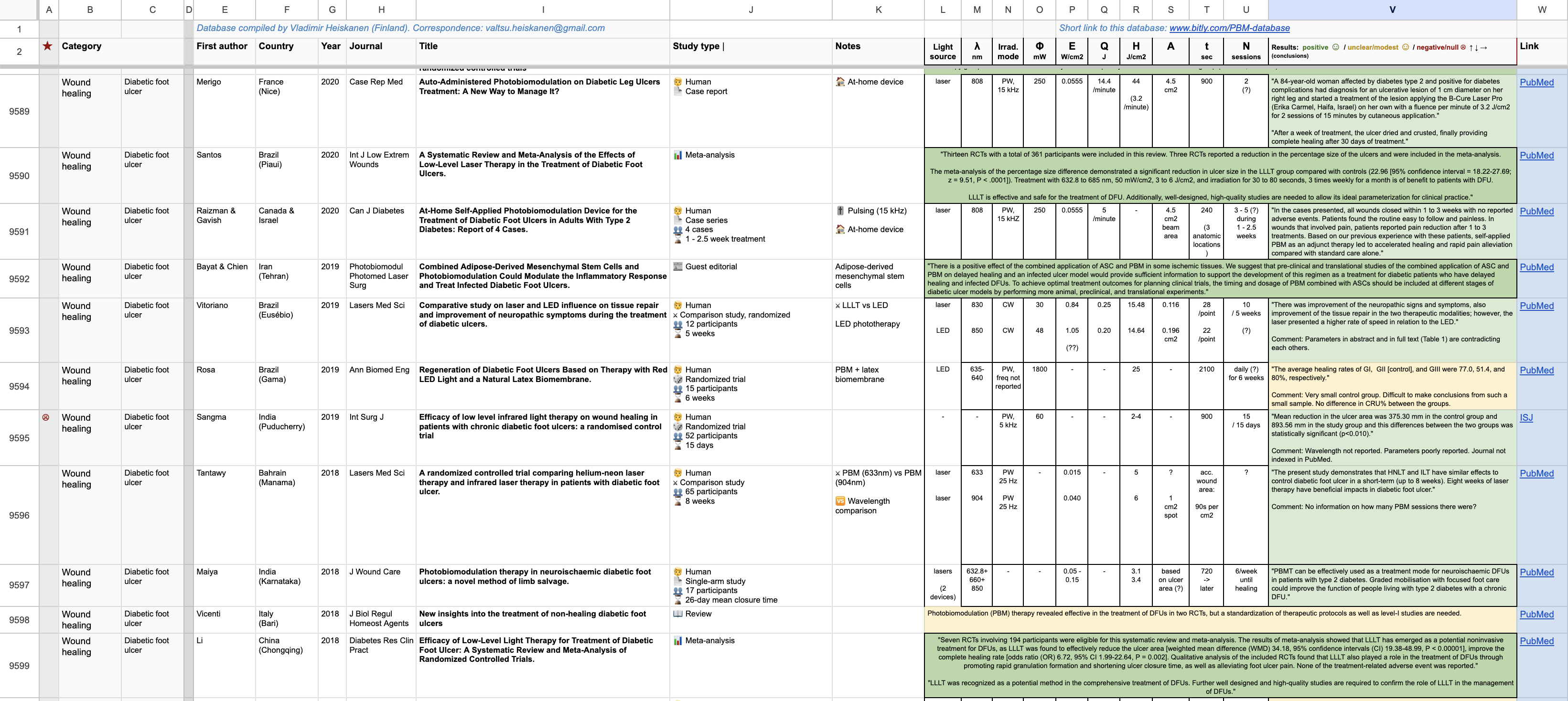
The table includes study details, treatment parameters, outcomes and links to the original publications.

PBM DatabaseGoogle Sheets · live working table ↗
Preview of the PBM Database spreadsheet, showing photobiomodulation studies, treatment parameters and results.
Study records, PBM parameters and outcomesOpen database  →

Why the PBM Database

One therapy, many names in the literature.

Published studies do not always use the same name for photobiomodulation. The database brings this varied literature together.

Examples of terms and descriptions in papers

Low-level light therapyLow-level laser therapyLow-power laser therapyLow-intensity laser therapyCold laser therapy (CLT)Laser acupunctureLaser treatmentLaser light irradiationLED phototherapyLED-lightLight-emitting diode irradiationRed-light photostimulationPhotobiomodulationPhotobiostimulationPhotostimulationNear-infrared light treatmentFar-red lightHelium–neon laser irradiationTranscranial laser stimulationTranscranial low-level laser (light) therapy660 nm LED light source904 nm laser

Some phrases describe the light source or wavelength rather than a standardized synonym.

How the database was built

Search terms, citation checks and manual review

The database was compiled by searching for PBM research under a range of terms and reviewing candidate records. Forward citation searches—checking papers that cite relevant studies already found—help identify additional papers.

Organized records

PBM Database

  • Study and publication details
  • Light and treatment parameters
  • Findings and source links
Open the database  →

The PBM Database is a manually curated resource that continues to be updated; it is not a formal systematic review.

Database annotations

What the database symbols mean

Small symbols make different aspects of a publication easier to scan—from study model and methods to light delivery, critical reading and findings.

The number beside each marking shows how many database records carry it. A record can have several markings, so these counts overlap. Curator highlights and interpretive notes describe the database curator’s reading, not an independent rating of study quality.

Study & method

  • HumanResearch involving human participants3,341
  • RatStudy using a rat model1,567
  • MouseStudy using a mouse model637
  • RabbitStudy using a rabbit model157
  • In vitroCells or tissues studied in the lab1,739
  • Sample sizeParticipant number is recorded2,967
  • Study periodTreatment or follow-up duration noted2,863
  • Randomized trialControl or PBM add-on group1,785
  • Active comparisonHead-to-head; no negative control306
  • Other studyCase, cohort, single-arm and similar1,161
  • Narrative reviewNon-systematic review1,073
  • Systematic reviewStructured review of studies341
  • Meta-analysisQuantitative synthesis of results356
  • EditorialEditorial or commentary147

Light & delivery

  • Wavelength comparisonDifferent wavelengths compared438
  • Biphasic dose responseResponse rises, then falls with dose261
  • Full-body PBMLight delivered to the whole body27
  • Vascular PBMPBM delivered into or over vessels43
  • PolychromaticMultiple wavelengths from the source195
  • At-home PBMSelf-administered PBM device48

Critical reading

  • Curator highlightSelected as noteworthy by the curator397
  • CautionStudy concern, e.g. poorly reported parameters256
  • Spin warningClaims appear to exceed reported findings20
  • PBM-related harmHarm associated with PBM is reported19
  • Parameter issueDose or parameter discrepancy13
  • Active shamSham receives lower-dose light7

Context & findings

  • Treatment photographArticle includes a photo of PBM being given307
  • Systemic effectSystem-wide effect is noted105
  • Drug comparatorPBM compared with a drug199
  • Inhibitory PBMSuppression or inhibition is studied7
  • Unexpected findingSurprising observation5
  • Very compelling findingCurator-selected standout4

Start here

One project, several ways in.

Start with the database for the full literature record, use Research statistics to see the field’s growth, and follow Ongoing studies to see what may add to the literature next.

PBM Database

The growing published research table, available through the project’s Google Sheets database.

Go to the database  →
i

Photobiomodulation Science presents the growing published literature and keeps study type, protocol and outcome context visible as the field develops.